Bagging a Few Falls
(or How to Fall Down the Hill)

by Tim Satterfield
Flowing from on high in the Cascade mountain range, Wychus Creek (Squaw Creek) flows from the
Central Cascades to the Deschutes river. For years I've heard about Squaw Creek Falls and when my hiking
partner call and said he wanted to do a day hike up to the falls, I jumped at the opportunity.
Checking the map I discovered that the falls are marked in two places on the map, the first falls up the
creek is labeled Squaw Creek Falls, the second falls on our map is also labeled Squaw Creek Falls.
We started up the trail early Saturday morning, our day trip had turned in to a overnighter as we had
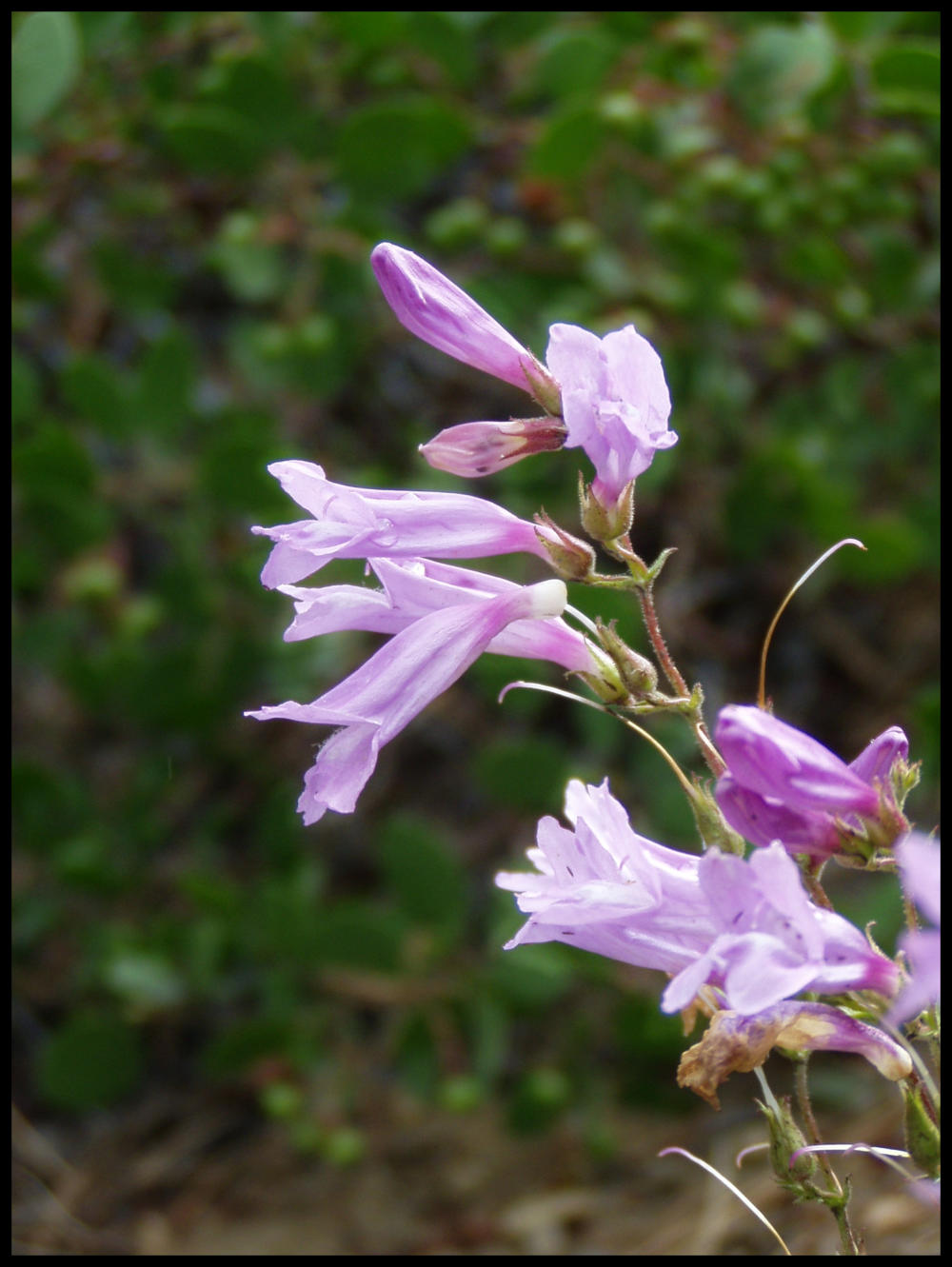
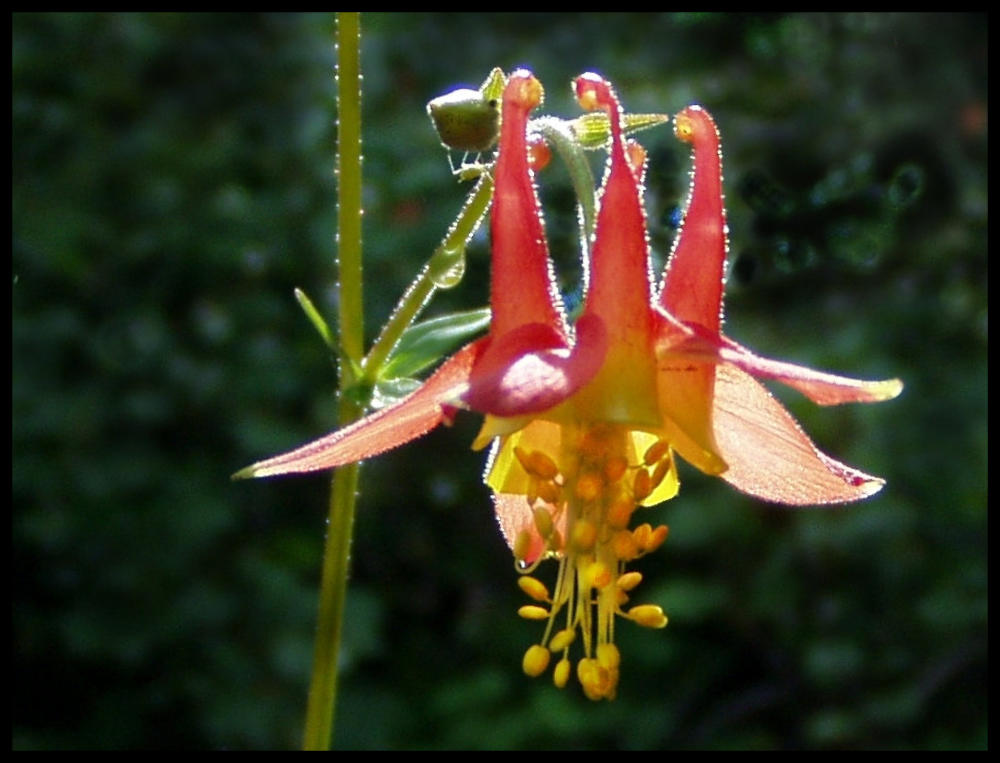
spotted five marked falls in the immediate area on our map. The area was alive with mountain flowers and we
spent much of the time photographing the flora and fauna of the area.
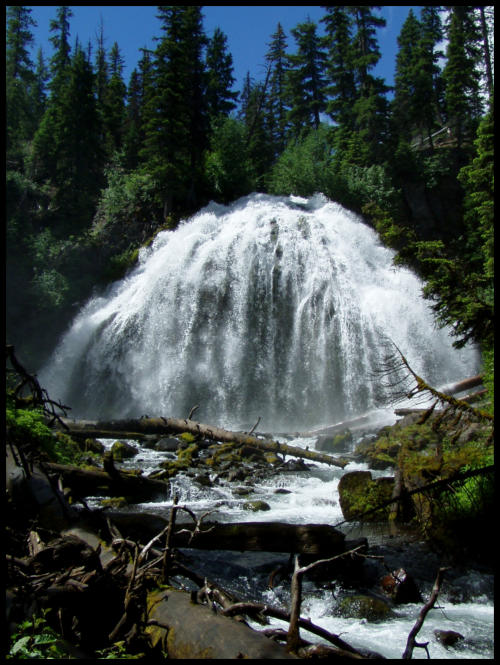
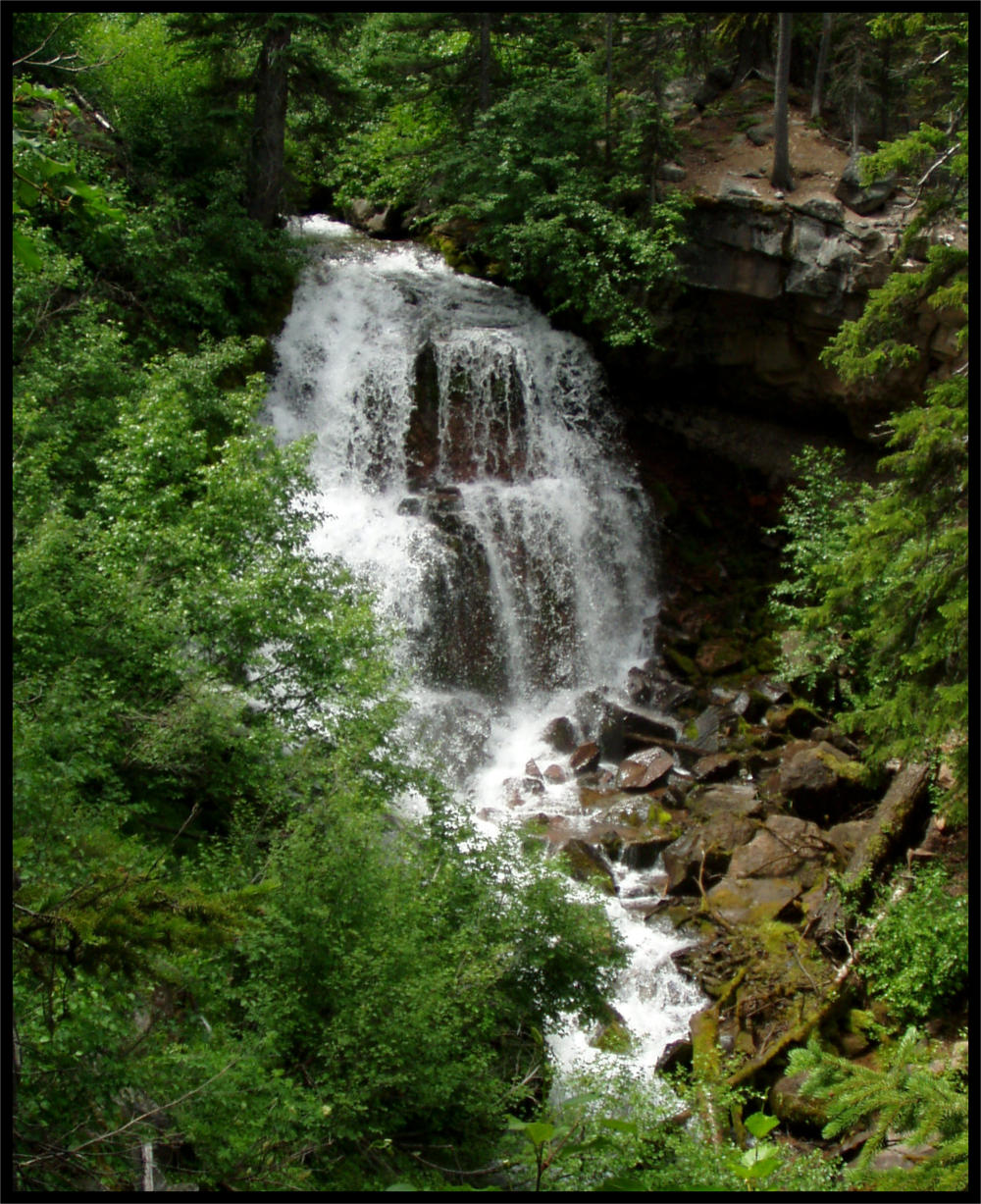
We arrived at the first falls (alias "Squaw Creek Falls") photographed it from high up on the trail and then
we climb down to the creek and photographed it there, we got some great shots.
We climb back up to the trail near the falls and continued on. We came upon a nice little falls that wasn't
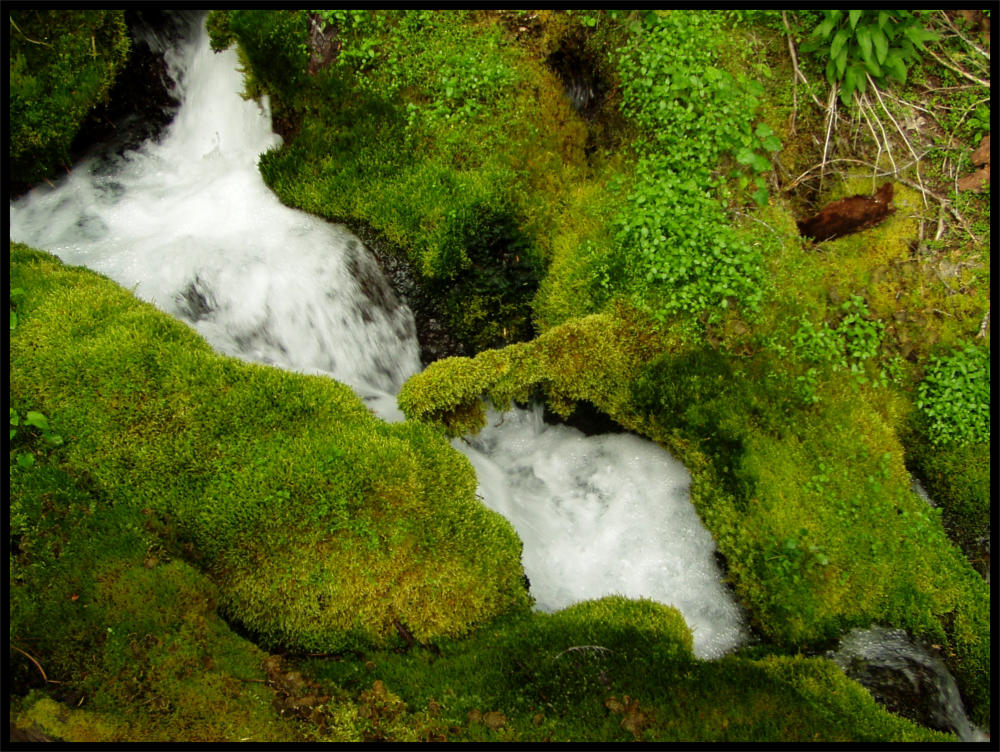
listed on our map and named the falls Stair Set Falls as its shape was that of a giant set of stairs.
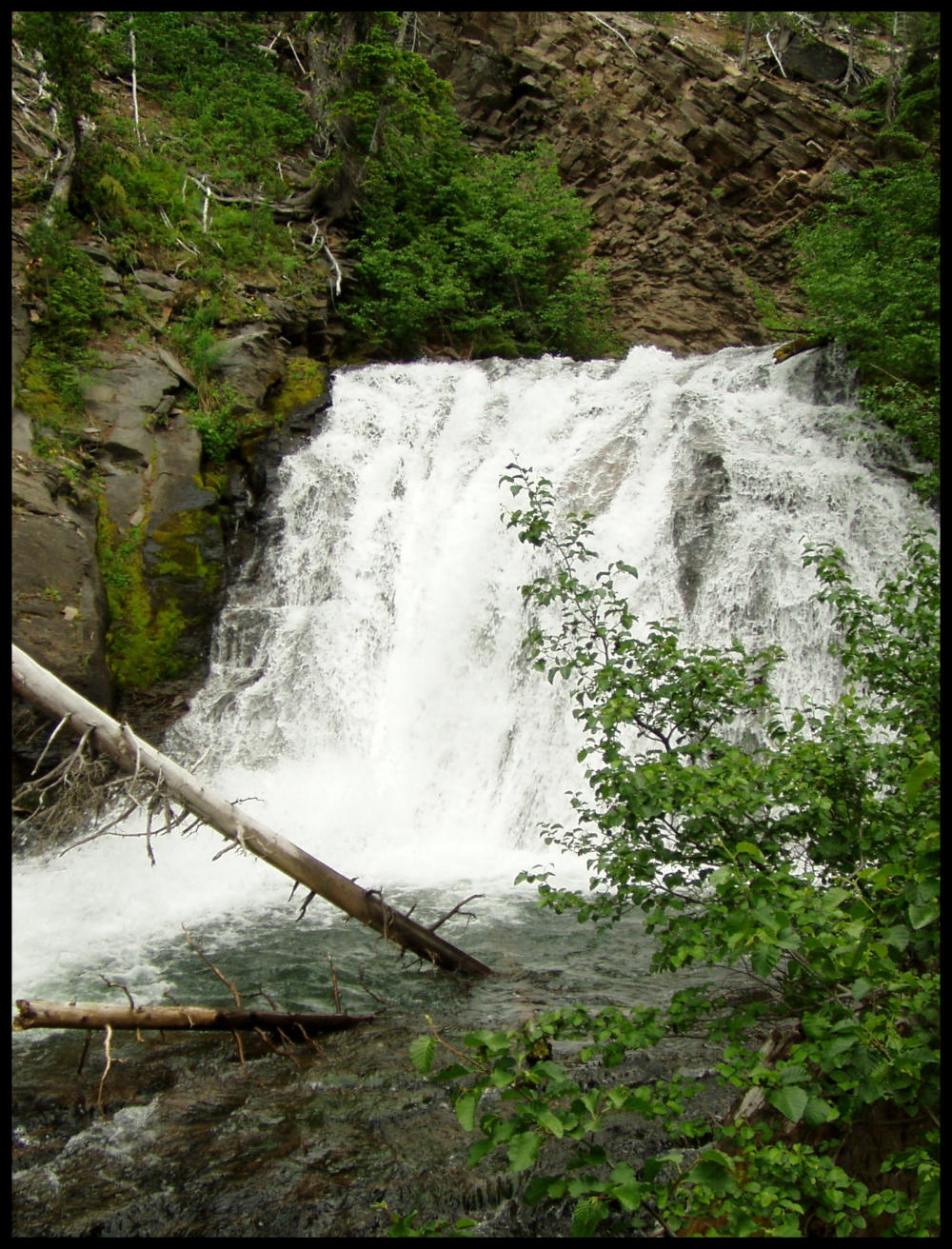
Continuing on up to the end of the trail we again came the to the falls know as "Squaw Creek Falls. This
falls however was in many ways more dramatic. The falls was over a hundred feet in height. It falls to the
north and east then makes a sudden left hand drop to for a really sensational photograph.
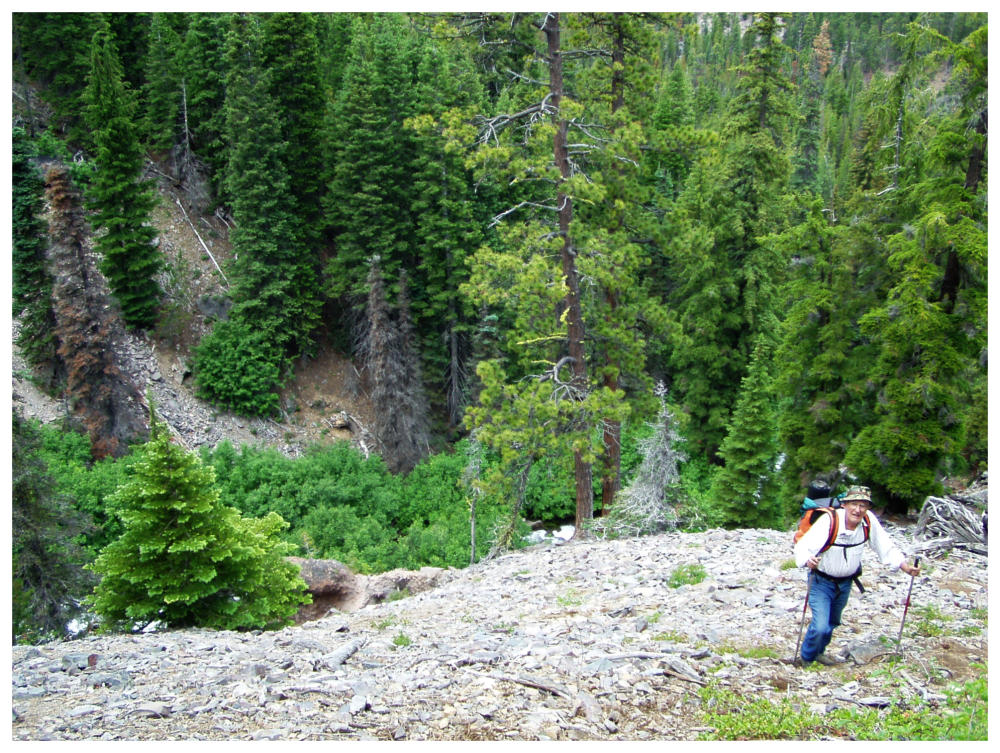
The trail stops here at the upper falls, we had other falls to bag so we climbed the shale on the east side of
the falls to obtain the upper plateau. The climb is quite steep as you can see from the photo. I was happy to
have along a pair of Swix CT-4 walking sticks to help me up the steep incline of moving rock.
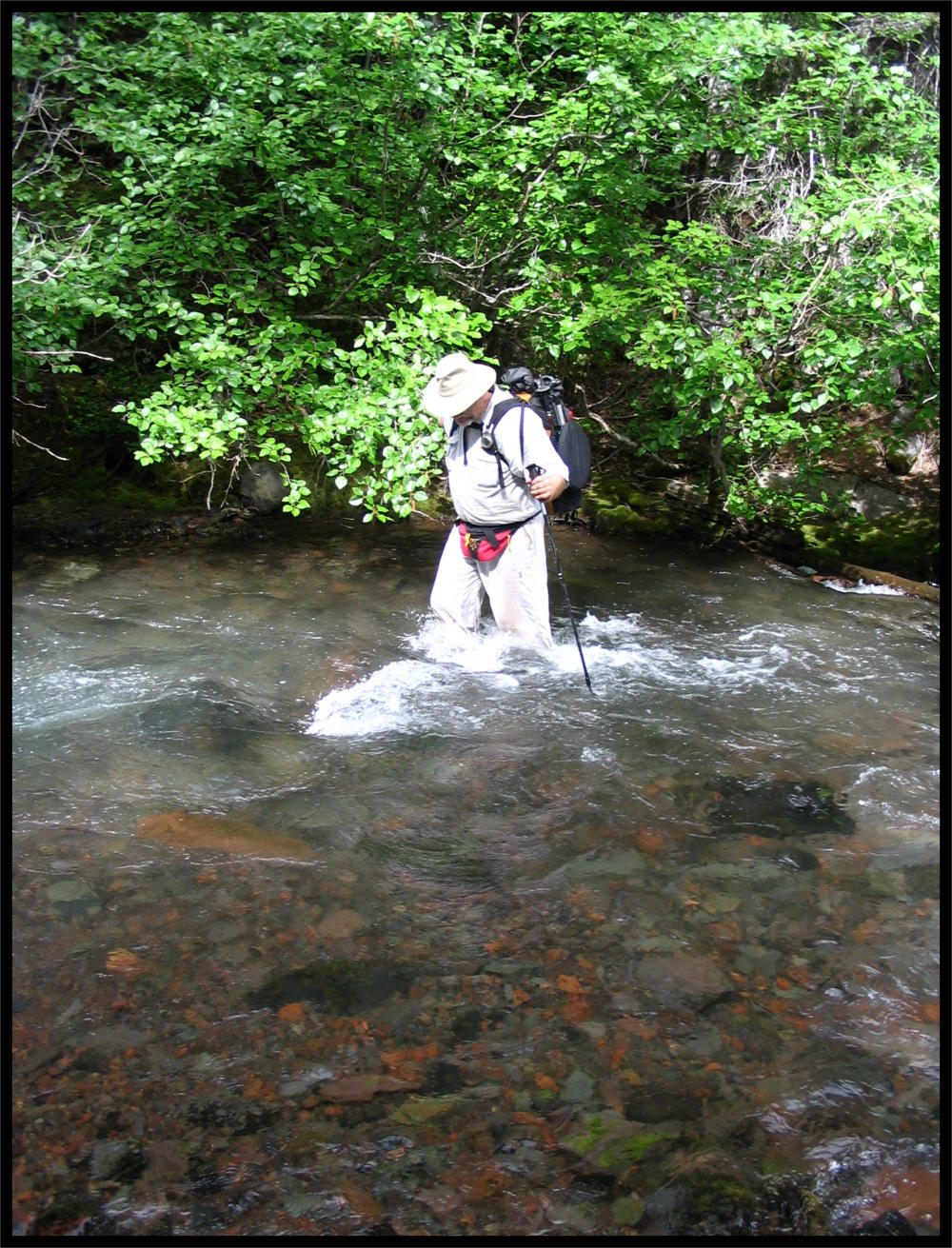
After topping out we crossed Squaw Creek and make our way across a small burn, where we set up camp
after fording Park Creek. The camp site was adequate, close to water and fairly well protected from any wind
that might arise.
It was starting to cloud in and rain was on the way. We quickly set up camp, I crawled under my White
Lightnin tarp and took a quick nap during the downfall.
The rain faded giving us a chance to explore our immediate area and photograph natures handiwork. That
evening after a meal of Mountain House beef stroganoff we again nodded off with the rain beating against
our shelters. The evening turned cold but the Therm-a-rest kept me off the ground and gave my old back a
good rest, the Mountain Hardware Phantom kept me nice and toasty for a great night's rest.
The next morning it was gruel and hot tea for Dean and I. We packed up and started north back to the
toward the trail head. We zig-zagged through the old growth timber between Park Creek and Fork Creek
looking for photographs.
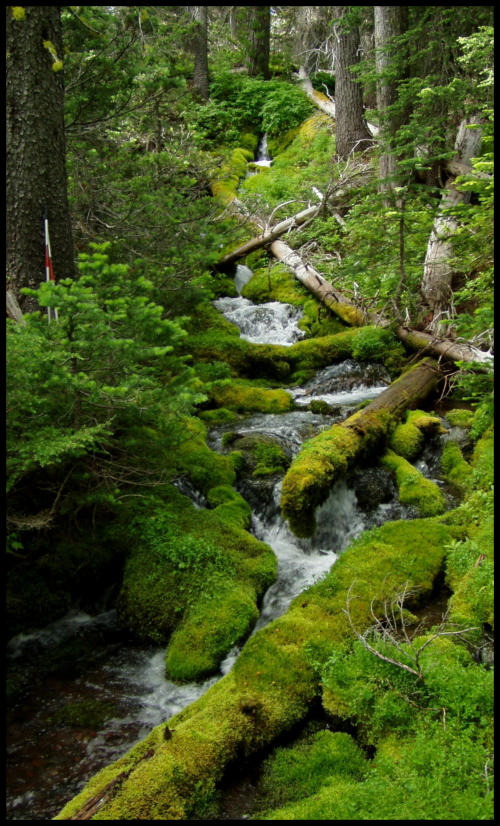
Fork Creek is a very small creek that consists of nothing but cascades, while Park Creek is a good size
little stream. As we moved north the gradient steepened through the old forest, we wound around large rocks
and stepped over fallen trees, all the while descending the hill. This hiker step over one two many trees. Dean
stepped up and over the big log first, then I climbed over the log but as my left foot struck the steep forest
floor and the slippery grass, I my traction and I started to fall. My right foot hung momentarily causing me to
spread eagle. I crash down hill into a tree with my left leg bent under and out to my side and as I landed on
my derrière I heard my knee go — pop.
When the screaming subsided I took eight Ibuprofen collected myself and found my walking poles and
limped on down hill following Dean across Fork Creek. We made our way through a thicket of Manzanita
and down toward Squaw Creek. We emerged down stream from the confluence of the three creeks we had
been photographing.
After crossing the creek we made our way up a steep incline (no trail) toward the Squaw Creek trail and
down to the trailhead and our vehicle.
Great trip except for one small misstep, the doctor thinks I'll live. Anyway the Snow Caps milk shakes
were as good as ever.
The Granite Gear Virga pack (1 lb. 3 oz.) on my back contained the following; tarp (1.75 lb. with stakes)
my tripod (2.89 lb.), cook kit with my stove a F1 Ultralight (2.7 oz.) from Coleman, Titan Kettle MSR,
small gas cartridge, Ti spoon from Snow Peak (b1 lb.). I also carried a Therm-a-Rest Prolite 4 (1.5 lb.) and
Mountain Hardware Phantom 32D sleeping bag (1.59 lb.). Including camera, a liter of water and other
paraphernalia, I was carrying 21 lb.
Thinking about the misstep, some thoughts accrued to me a little later (after the throbbing subsided):
What would have happened to my knee if I had the traditional backpack and equipment instead of the going
with light weight equipment? Would the added weight have cause more damage to my knee? And how would
I have faired carrying out a 40 to 45 lb. backpack the three or four miles or farther to the car.
There is a real safety factor by going lightweight. Less fatigue at the end of a long day on the trail, thus
less chance of injury on the trail or off the trail as we were.
In the good old days 45 or 50 pounds was the norm, but with the advent of light weight equipment, a
person can put together an outfit that just weighs 15 to 20 pounds without really trying. I you want to try
hard, you can get your pack under 12 pounds.
How much harder would the walk out have been if I didn't have my trusty Swix poles? And because of
the lightweight pack I can take more toys along (camera gear).